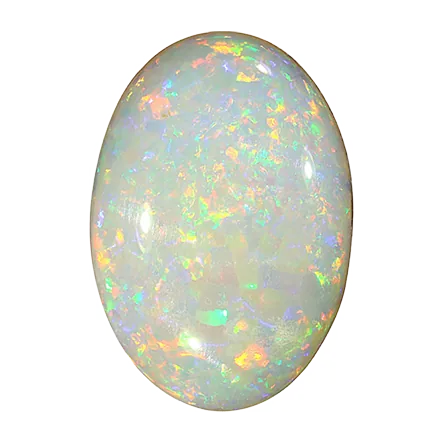
neutral · gemstone
Opal
- Birthstone
- October
- Hardness
- Mohs 5-6.5
- Colour
- neutral
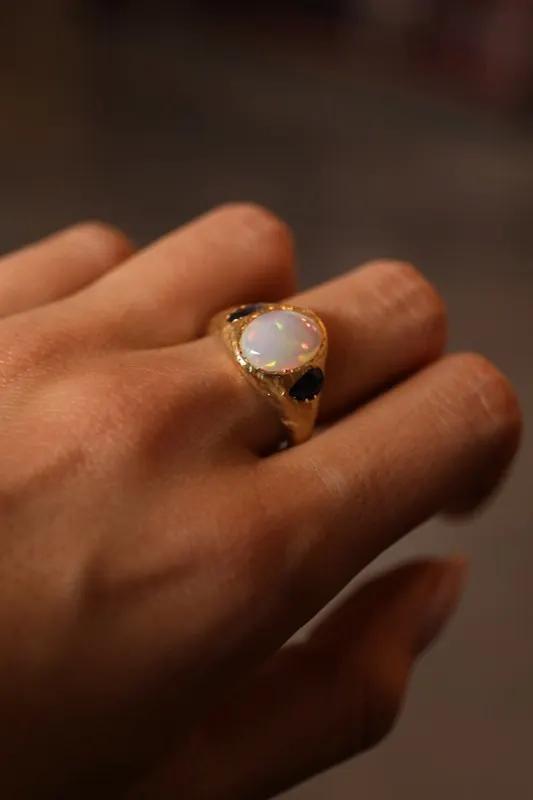
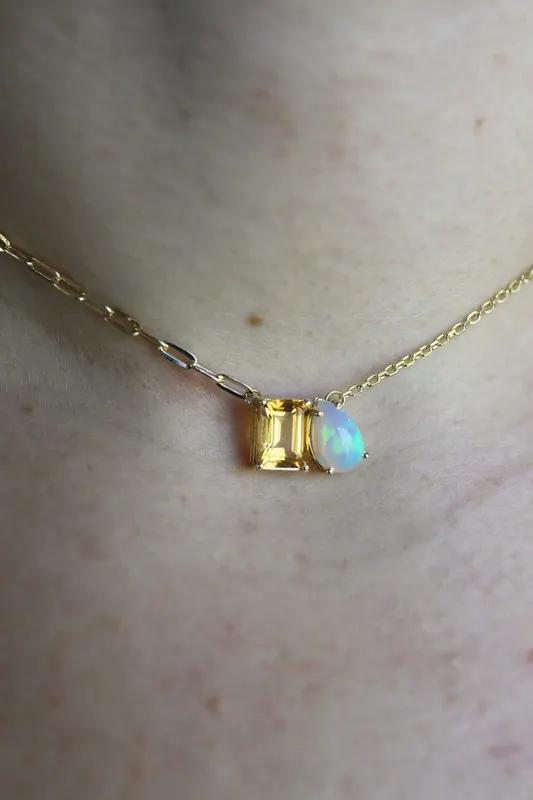
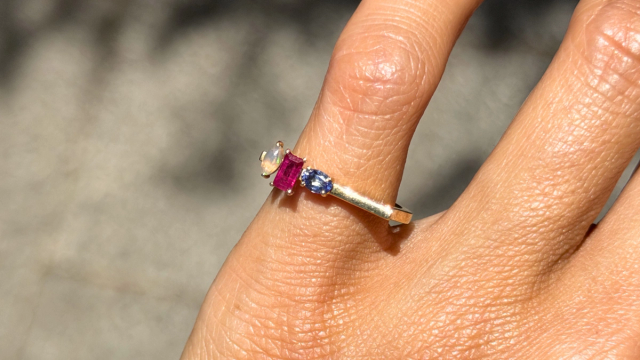
Opal is a unique gemstone that displays a plethora of forms and colours, making each gemstone unique in its own way. It is highly popular due to its play of colour, or opalescence, that changes depending on the angle at which the stone is viewed.
Enter the Stone Room · Opal, staged →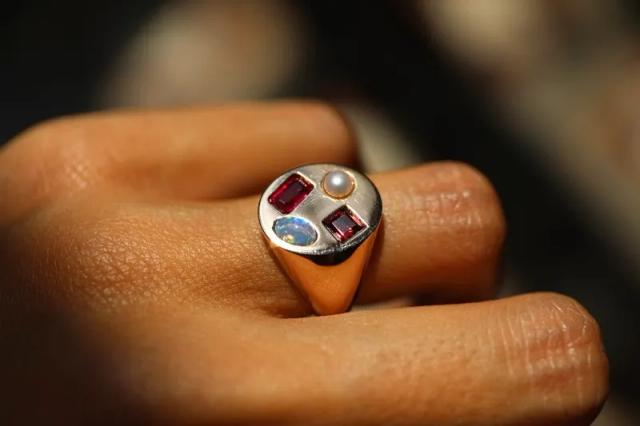
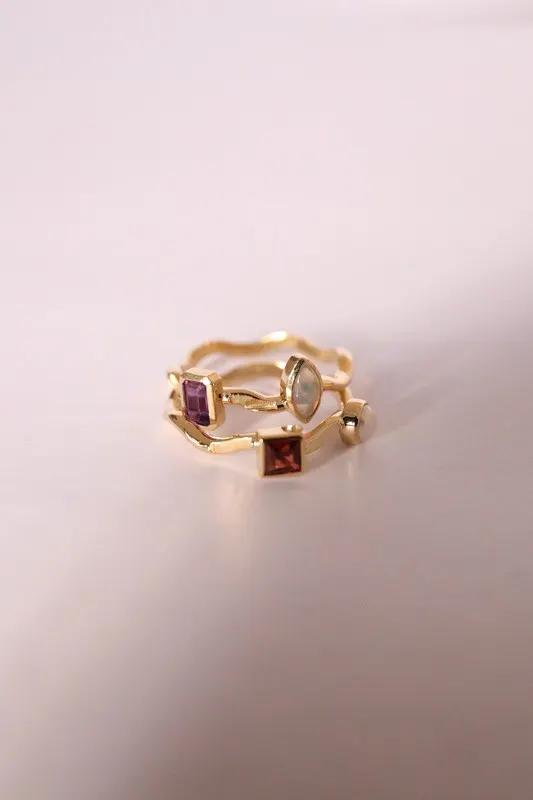
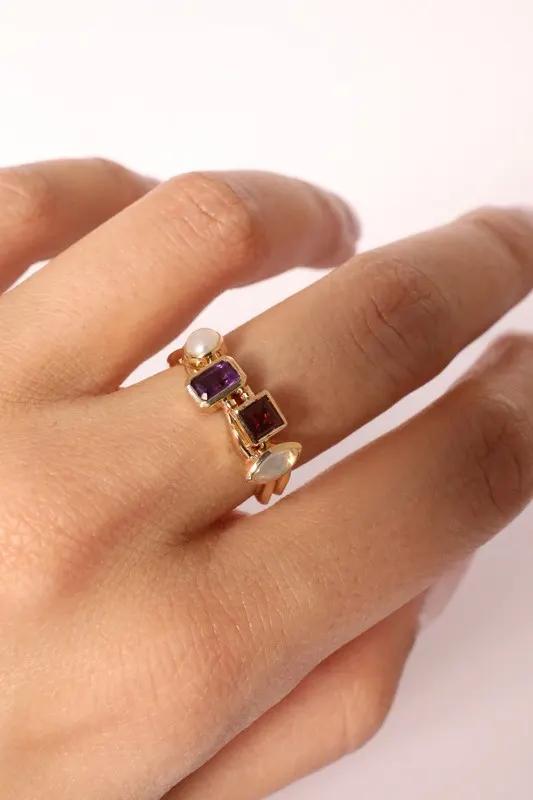


Opal, the story
An opal’s value is determined by several factors, including the intensity and distribution of its opalescence, the saturation of body colour, the play of colour, and the transparency.
Opal is the product of seasonal rains that drenched dry ground in regions such as Australia’s semi-desert ”outback.” The showers soaked deep into ancient underground rock, carrying dissolved silica (a compound of silicon and oxygen) downward. During dry periods, much of the water evaporated, leaving solid deposits of silica in the cracks and between the layers of underground sedimentary rock. The silica deposits formed opal.
Opal comes in different forms, including black opal, with its dark body tone, and boulder opal, where fragments of the surrounding rock, called matrix, become part of the finished gem
Symbolism and tradition
The Romans believed that opal was the most precious and powerful of all gems because it had the colours of other gems. The Bedouins believed that opals contained lightning and fell from the sky during thunderstorms.
These associations describe cultural beliefs, not demonstrated effects of wearing the stone.